
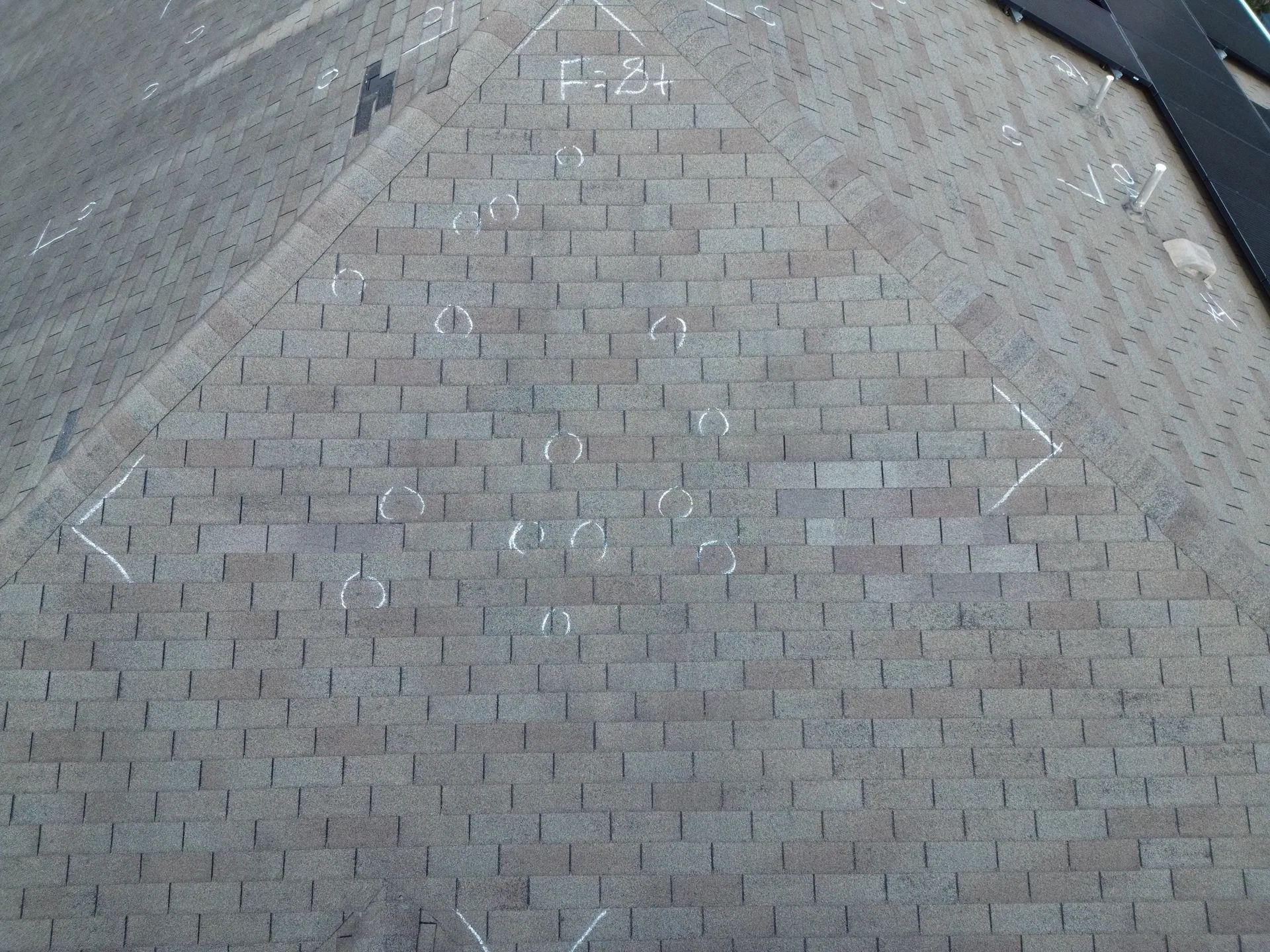
Central Texas storms do not give much warning. A clear afternoon in Hutto can turn into a hailstorm or a burst of high wind within the hour, and by the next morning the sky is blue again. The trouble is that storm damage on a roof rarely announces itself the same way. A roof can look fine from the driveway and still have bruised shingles, cracked seals, or lifted tabs that will let water in during the next heavy rain.
This guide walks through what hail and wind actually do to a roof, the warning signs you can check safely from the ground, and what to do next if you think your roof took a hit.
What hail does to a shingle roof
Hail rarely punches a clean hole through an asphalt shingle. More often, it leaves a bruise: a dark, soft spot where the impact knocked the protective granules loose and weakened the mat underneath. That bruise breaks the shingle's weather seal. It may not leak this week, but over time the exposed spot wears faster, cracks, and lets water reach the decking.
Hail also leaves marks on softer metal parts of the roof. Box vents, ridge vents, pipe boots, and flashing often show small dents after a storm, and those dents are one of the easiest ways to tell that hail was large enough to matter.
What wind does to a roof
Wind damage looks different. High gusts get under the edge of a shingle and lift it, which can break the sealant strip that holds it down. A shingle that has been lifted and creased may lie back down looking normal, but it no longer grips the shingle below it, so the next storm can peel it away entirely. Ridges, roof edges, and corners take the brunt of it, because that is where wind pressure is strongest.
Signs of storm damage you can check from the ground
You do not need to climb a ladder to spot the most common warning signs. In fact, we recommend you stay off the roof, since storm-damaged shingles and wet surfaces are slippery and unpredictable. After a storm passes, walk your property and look for:
- Granules collecting in gutters or at downspout outlets
- Shingles that are missing, lifted, or creased along ridges and roof edges
- Dents on gutters, downspouts, vents, or outdoor equipment
- Shingle pieces or debris in the yard
- Water stains on ceilings or along interior walls
- Daylight visible through the attic decking
If you see any of these, the roof deserves a closer look by someone trained to find the damage you cannot see from below.
Why a professional inspection matters after a storm
Much of the damage that leads to leaks is hard to spot from the ground. Hail bruising, granule loss, and broken sealant strips show up best on the roof itself, slope by slope. During a free roof assessment, we inspect the whole roof surface along with the flashing, vents, and gutters, photograph every affected area, and give you a written report that explains what we found in plain language.
That record matters even if the damage turns out to be minor. It gives you a dated snapshot of your roof's condition, which helps if problems show up later.
What to do if you find damage
If the inspection does find storm damage, the next steps usually look like this:
- Protect the home. If there is an active leak or an opening in the roof, tarping and temporary protection keep water out while you decide on repairs.
- Decide whether a claim makes sense. Not every storm leaves damage worth a claim, and our assessment tells you what we found before you file anything.
- File with your insurance company. If you file, the photos and written report give your insurer clear evidence. When needed, we can meet your adjuster on site so the damage we documented is seen firsthand.
- Repair or replace. Once your claim is decided, we complete the storm damage roof repair or roof replacement and finish with a walkthrough and a full cleanup.
One thing worth knowing: we are your roofing contractor, not your adjuster. Your insurance company reviews the claim and decides what your policy covers, and we never negotiate a claim on your behalf. Our job is to give you accurate documentation and an honest assessment. You can read more about how that works on our roof insurance claims page.
Do not wait for a leak
Storm damage that goes unchecked tends to get more expensive with time. A bruised shingle becomes a cracked one, a lifted tab becomes a missing one, and a small opening becomes wet decking and stained drywall. Catching it early keeps a repair a repair.
Right Way Roofing Pros is a local, owner-led roofing company based in Hutto, serving homeowners across Round Rock, Pflugerville, Georgetown, Austin, and Williamson County. If a recent storm has you wondering about your roof, schedule a free roof assessment or call us at (512) 587-8794. We will tell you honestly what we find, whether that means a repair, a claim, or nothing at all.